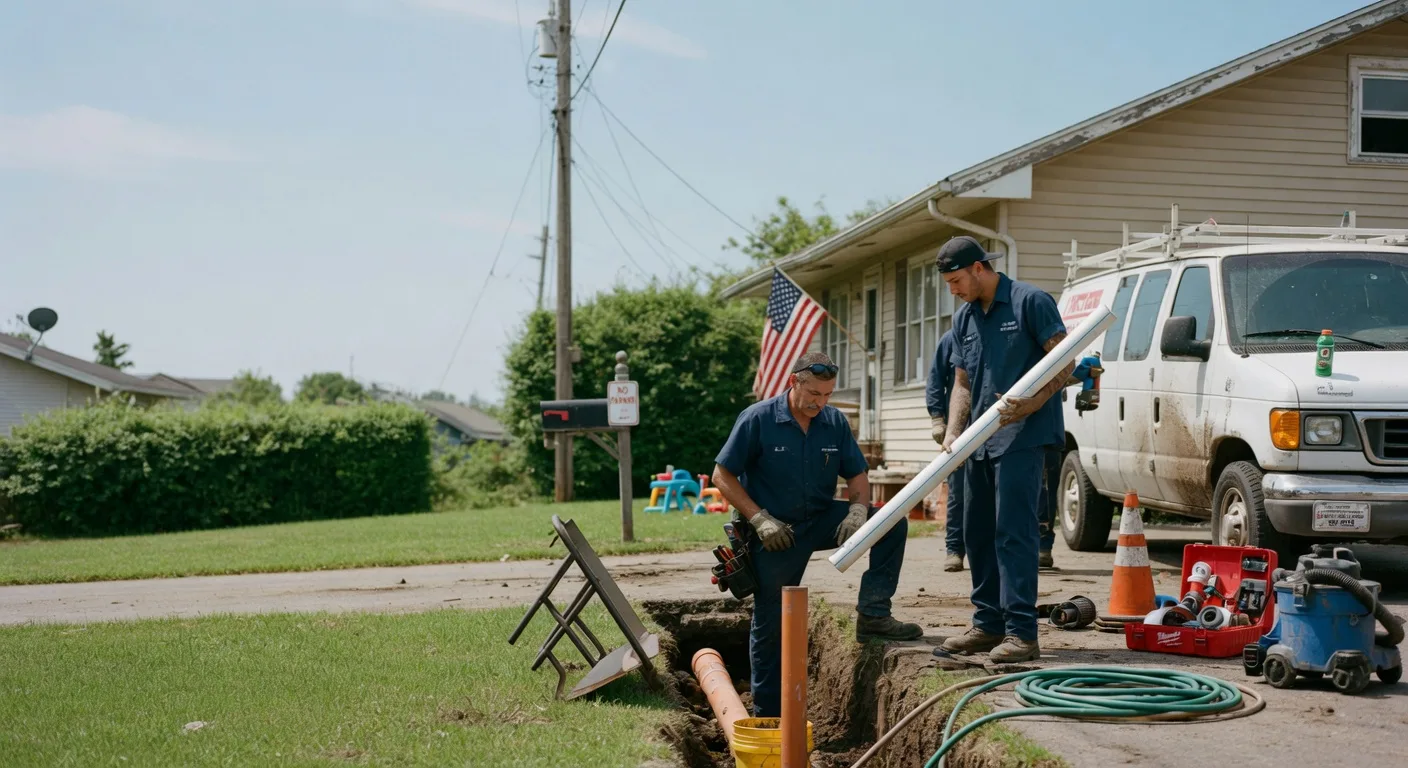
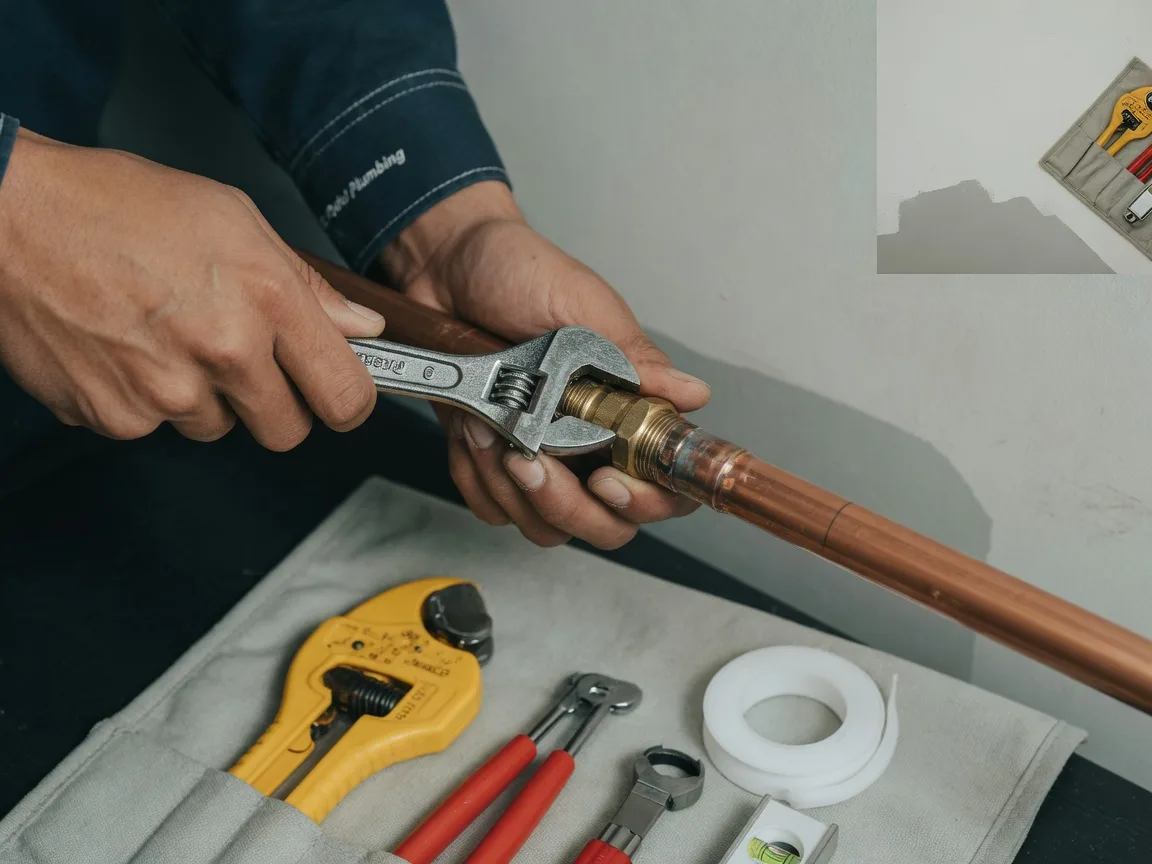
Why does my basement floor drain back up when it rains?
A floor drain that backs up when it rains is usually not a clog in the drain itself. It means the sewer line outside the house is full, and the water has nowhere to go but up through the lowest opening, which is your basement floor.
Heavy rain can push extra water into the main line through cracked joints, root intrusion at a clay joint or a failed sewer lateral. The line fills, and the floor drain shows it first.
Safe homeowner check: on a dry day, pour a bucket of water into the floor drain and see if it runs away normally. Keep stored items off the floor, and do not run the washer, showers or dishwasher during the storm.
Stop running water and call now if sewage is rising, the smell is strong, or every drain in the house is gurgling or backing up. That points to the main line, not one fixture.
A cable machine can clear roots or grease when a blockage is the cause. If the line keeps filling in wet weather, a camera inspection is the next step, because it shows whether the pipe is cracked, bellied or breached. Hydro jetting washes the pipe wall once the cause is known. Cost depends on access, how much has to be opened up, the materials involved and any permit requirement.
Expert Plumbers Co is a referral service. Call (380) 262-9173 and we will connect you with a plumber serving Blanding, UT for Emergency Drain Cleaning or a camera inspection.
Pay attention to how fast the drain responds, because it tells you how serious the cause is. If the water rises within minutes of a downpour starting and drops soon after it ends, the line is being overloaded by water entering through cracks or joints. If it stays up for hours after the rain stops, something is also holding water in the pipe, such as a belly or a root mass. Older homes often have clay or cast iron lines with many joints and sometimes a downspout or foundation drain connected to the sewer, which makes wet-weather backups more likely. Newer homes with plastic pipe usually have fewer joints, so a backup there points more strongly to a blockage or a municipal main running full. Tell the plumber when the backups began, how heavy the rain was, and whether any gutters or sump discharge are tied into the house drains. Once the cause is fixed, the floor drain should stay quiet through storms.
My drains back up every autumn. Why is it seasonal?
That pattern is a clue. Drains that back up every autumn usually have a fixed fault that the season exposes.
Roots chase moisture and grow most actively in the warm months. A clay joint that was passable in spring can be choked by late summer. Then the first heavy autumn rain loads a line that was already marginal, and it backs up.
Leaves are the second cause. Leaves and seed debris wash into a yard drain, a window well or an open cleanout and pack the line. A third cause is a blocked vent stack. Leaves over the roof opening cause gurgling and slow flow without any clog in the pipe.
Safe homeowner check: clear the gutters and the yard drain grate, lift leaves out of the window well, and check that the cleanout cap is seated. Listen for gurgling after a toilet flush.
Stop running water and call now if every drain in the house is slow or backing up, if the lowest tub or floor drain bubbles or fills, or if sewage odor is strong. Those signs point to the main line or a failed sewer lateral. Water used in the house only adds to the backup. Emergency Drain Cleaning calls come from exactly this situation.
A single slow fixture is a cable job. A line that clogs on a schedule is a camera inspection case, because the interval is a symptom of a fixed fault. The camera shows whether it is root intrusion, a bellied section or a damaged joint. Hydro jetting clears the line, and the repair deals with the cause.
Expert Plumbers Co is a referral service. We refer homeowners in Blanding, UT to an independent local plumber. Call (380) 262-9173.
Keep a simple log. Note the date, the weather and which fixtures backed up each time. If the dates cluster on rainy days, a storm load or root problem fits. If they follow leaf fall in dry weather, look first at the vent stack and the outside drains. Hand the log to the plumber. It saves a lot of guessing.
If you can plan ahead, book a camera inspection in late summer, when roots are at their thickest and the line is not under storm load. Cutting roots back then, before the rain, is a calmer job than an overnight backup.
Be wary of root-killing foam as a cure. It can slow regrowth, but it does not repair the joint where the roots get in, and they return. Shallow-rooted trees near the lateral, such as willows and maples, are repeat offenders, so mention what grows near the line. Learn where your cleanout is before you need it.
We had roots cut out of our sewer line a year ago and now it is backing up again. What actually stops them coming back?
Cutting does not stop roots. It clears the pipe so water can pass, but the roots are still alive outside it and they grow back through the same opening. A year is a fairly typical time for a line to fill up again, and sometimes it is faster.
Roots get in where the pipe is not sealed: a joint that has shifted, a hairline crack, a broken section. Tree roots follow moisture, and a sewer pipe leaks a little water and vapor, which draws them in. As long as the entry point is open, regrowth is only a matter of time.
What actually removes the cause is closing that opening. There are three common routes, and the right one depends on what a camera inspection shows.
A spot repair fixes a single bad joint or short cracked section. It makes sense when the rest of the pipe is sound.
A liner is a resin-saturated sleeve that is cured inside the old pipe, sealing joints and cracks along its length. It suits pipes that are cracked or leaking at several joints but are still round and in place.
Replacement is the answer when the pipe is collapsed, badly offset, bellied or made of a material that has failed, such as clay in poor shape.
Chemical products poured into the line, or foaming treatments, may slow some regrowth but do not seal the entry point, so they are not a repair.
Safe checks you can do:
Note when the slow drains started and which fixtures are affected. Mention the earlier root cutting to the plumber, and the approximate date.
Stop running water and call now if sewage is backing up into the house.
If a full repair is not possible right away, scheduled cleaning before the next backup can manage the problem, though it stays a stopgap. Cost depends on how many entry points there are, depth and length, access around trees and hardscape, the method chosen and permits under local code. To be connected with an independent local plumber in Blanding, UT, call Expert Plumbers Co on (380) 262-9173.
My child flushed a toy, or something solid went down the toilet. What should I do, and what should I not do?
Stop first. Do not flush again, even if the water looks like it is going down. Each flush pushes the object further along, and it can lodge in the toilet's trap or in the drain behind it. Tell everyone in the house not to use that toilet.
If the toilet still drains but the bowl is high, leave it. If it is rising toward the rim, lift the tank lid and push the flapper down, or turn the shutoff valve behind the toilet clockwise to stop more water entering.
What is safe to try: if you can see the object near the bowl opening and it is not breakable, put on gloves and pick it up. Use a wet vac or a closet auger only if you are comfortable with it, because an auger can also shove a hard toy deeper. Be gentle with a plunger. A plunger can free a soft item, such as paper or cloth, but it often wedges a solid piece tighter.
What not to do: do not use chemical drain cleaners, which do nothing to a solid object and make the water dangerous to handle. Do not keep plunging hard, and do not push a coat hanger down the drain, which can scratch the porcelain or drive the object into the pipe wall.
If the object has already gone and the toilet seems normal, watch for slow drains, gurgling or other fixtures backing up over the next few days. A small toy can catch in a bend and collect paper behind it. If the toilet becomes slow, or the same one keeps clogging, the object is probably still in the line.
In that case the plumber may pull the toilet off its seat to retrieve it from underneath, which is often cleaner than cabling into a pipe. If the item is in the drain behind the toilet, a camera can find it and the plumber can retrieve it or push it clear. Cost depends on where it lodged, whether the toilet must be removed, and how much access is needed.
Expert Plumbers Co can connect you with an independent plumber in Blanding, UT for this: call (380) 262-9173.
Since we put in a water softener, the floor drain or laundry drain backs up when it regenerates. Are they related?
The softener finishes its cycle and a minute later the laundry drain gurgles or the floor drain spits up gray water. You did not have this before, so it is fair to wonder if the softener caused it. In most cases it did not cause the clog. It exposed one.
During regeneration, a softener flushes brine and rinse water out through a drain hose, usually into a standpipe, laundry tub or floor drain. That water arrives in bursts, and the volume is sudden. If the drain line is clear, it carries the surge without trouble. If the line has a partial clog, such as grease build-up on the pipe wall, a root mat at a clay joint or a belly holding water, the burst is more than it can pass, and the water rises in the lowest drain.
The discharge also needs to be set up properly. Most plumbing codes require an air gap, a physical space between the end of the softener drain hose and the drain, so wastewater cannot siphon back into the softener. A hose pushed deep into a standpipe, or taped tight to it, can cause splashing and backflow of its own. Rules vary by area, so the installer or local building department can say what applies in Blanding, UT.
The key question is how widespread it is. If only the standpipe backs up, the trouble may be the standpipe, its trap or the softener hose. If the floor drain, laundry drain and a basement toilet all react, the main drain is partly blocked, and the softener is just the first thing to push it over the edge.
Safe homeowner check: look at where the softener hose ends. Make sure it sits above the drain with a visible gap and is not kinked or pushed down inside the pipe.
Stop running water and call now if sewage is coming up through the floor drain, if water is spreading across the floor, or if you smell sewage.
A cable machine is often enough for a soft clog in a short branch. If roots, a belly or grease are suspected, the work calls for a camera inspection and hydro jetting.
Expert Plumbers Co is a referral service. We connect you with an independent local plumber in Blanding, UT. Call (380) 262-9173.
Tell the plumber the problem started after the softener went in and when in the cycle it shows up. Ask them to check the air gap and the standpipe as well as the main. Scope depends on access to the line, parts for any standpipe or hose changes, how much has to be opened up if a section is damaged, and any code requirement.